Beta Amylase for Brewing Mash — Maltose Generation for Beer and Ale
Exo-acting beta amylase removes maltose from starch chain ends during mashing, building the fermentable sugar fraction that drives yeast attenuation in all-malt, adjunct, and craft brewing systems.
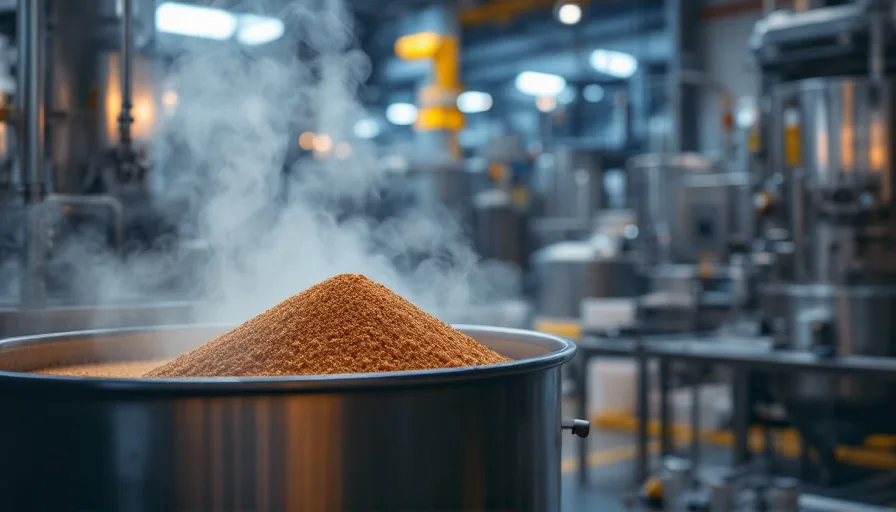
Fermentability — the proportion of wort sugars that yeast can ferment — is defined during mashing. The mash temperature programme determines how much of the starch becomes maltose (fermentable) versus higher dextrins (unfermentable body). Beta amylase is the enzyme responsible for maltose production. It acts exo-specifically from the non-reducing ends of amylose and amylopectin chains, releasing maltose disaccharide units sequentially. In all-malt brewing, barley malt contributes substantial endogenous beta amylase, but this enzyme is relatively heat-labile — activity falls sharply above 65°C and the enzyme is inactivated by 70°C. When mash temperature rises, wort fermentability drops and residual dextrin content increases.
Exogenous beta amylase supplementation gives brewers independent control over wort fermentability, separate from mash temperature. By adding beta amylase from barley extract or soybean source (50,000–150,000 U/g, pH 4.5–6.5, Temp 45–65°C), brewers can hold mash temperatures at 66–68°C for body-building saccharification rests while still achieving the target apparent attenuation limit (AAL) by ensuring adequate maltose production from supplemental enzyme activity. This is especially valuable in adjunct brewing with corn, rice, or sorghum, where no endogenous enzyme is contributed by the adjunct portion of the grist.
In commercial lager brewing with high adjunct loading (30–50% corn or rice), the dilution of malt enzyme activity by the adjunct starch load often results in lower-than-target fermentable extract without enzyme supplementation. Exogenous beta amylase at 0.5–2.0 kg per tonne of total grist, added at mash-in at 55–65°C and pH 5.2–5.6, provides sustained maltose production throughout the saccharification rest, compensating for the malt enzyme deficit and stabilising wort fermentability batch to batch.
For craft brewers seeking precise fermentability control, and for industrial brewers managing high-adjunct systems, beta amylase is the targeted tool. COA, TDS, food-grade, HALAL, and KOSHER documentation is available per lot. MOQ 25 kg.
All-Malt Ale Mashing for High Attenuation
In craft ale brewing, high apparent attenuation (>75%) requires sustained beta amylase activity at the saccharification rest temperature. When mashing at 63–65°C for 60 minutes, endogenous malt beta amylase produces sufficient maltose in most well-modified malts. However, for high-gravity brewing above 16°P or for malt lots with lower enzymatic activity, supplemental beta amylase at 200–500 g/t grist maintains fermentability even as the enzyme load is diluted by high starch substrate concentration.
Adjunct Lager Brewing with Corn or Rice
Industrial lager with 30–50% corn or rice adjunct dilutes malt beta amylase activity proportionally. Exogenous beta amylase at 0.5–1.5 kg/t total grist is added at mash-in (60–65°C, pH 5.2–5.5) to compensate for the enzyme deficit. This maintains target wort fermentability (apparent attenuation limit 75–80%) despite the high adjunct load, enabling consistent final gravity and alcohol content in large-volume lager production without reformulating the adjunct ratio.
Wheat Beer and Hefeweizen Mashing
Wheat malt has lower beta amylase content per kilogram than barley malt. High-wheat-content mashes (50–70% wheat malt) may have insufficient beta amylase activity for the target fermentability, particularly at mash temperatures above 64°C used to develop the full mouthfeel characteristic of hefeweizen styles. Supplemental beta amylase at 300–600 g/t grist at the saccharification rest temperature ensures complete maltose production without requiring lower mash temperatures that would reduce body.
High-Gravity Brewing and Beer Concentration
High-gravity brewing at original gravities above 16–20°P subjects the beta amylase enzyme to high solids stress that can reduce its activity more quickly than at standard gravity. Supplemental beta amylase at 1.0–2.0 kg/t grist maintains maltose production throughout the extended mash time typically used in high-gravity brewing. The resulting high-fermentability wort dilutes well at packaging while maintaining consistent beer quality and flavour stability across gravity levels.
| Parameter | Value |
| Activity range | 50,000 – 150,000 U/g (multiple grades) |
| Optimal pH | 4.5 – 6.5 |
| Optimal temperature | 45°C – 65°C |
| Form | White to light yellow powder |
| Shelf life | 12 months (sealed, cool, dry place) |
| Packaging | 25 kg fiber drums |
Frequently Asked Questions
What is the role of beta amylase in brewing mashing?
Beta amylase acts on the non-reducing ends of starch and dextrin chains to release maltose, the primary fermentable sugar in beer wort. In mashing, the combined action of alpha amylase (which fragments starch internally) and beta amylase (which removes maltose from the fragments) determines wort fermentability. The mash temperature window of 60–65°C favours beta amylase activity and produces high-fermentability wort; mashing at 68–72°C reduces beta amylase activity and produces more residual dextrins and fuller-bodied beer.
At what dose should exogenous beta amylase be added to the mash?
For all-malt mashes where malt enzyme is nearly sufficient, 200–500 g/t grist is typical. For adjunct mashes (30–50% corn or rice), where malt enzyme is diluted, 0.5–1.5 kg/t total grist is the recommended starting range. High-gravity mashes above 16°P may need 1.0–2.0 kg/t. Add the enzyme at mash-in with the main mash at 60–65°C and pH 5.2–5.5. Confirm the optimal dose through fermentation trials — measure apparent attenuation limit on trial wort samples before committing to plant-scale dosage.
Does beta amylase work alongside alpha amylase in brewing?
Yes. In mashing, alpha amylase and beta amylase work synergistically. Alpha amylase (endo-acting) randomly fragments gelatinised starch into smaller dextrins, creating more non-reducing chain ends for beta amylase to attack. Beta amylase then removes maltose from these ends progressively. The combination produces a wort with higher maltose content than either enzyme alone. In low-malt or no-malt systems, both exogenous alpha amylase and beta amylase are required for complete starch conversion to fermentable sugar.
Why does beta amylase activity decrease at high mash temperatures?
Beta amylase is a relatively heat-sensitive enzyme compared to bacterial alpha amylase. Its activity begins to decline above 62–63°C and it is largely inactivated by 70°C with a 60-minute mash rest. This is why traditional mash temperature programmes use a saccharification rest at 63–65°C to maximise fermentability before stepping up to 72°C for mash-out. Supplemental exogenous beta amylase, when added at the beginning of the mash, extends the period of maltose production during the saccharification rest before thermal inactivation limits further activity.
Request Beta Amylase for Your Brewery
Provide your application and required volume. Receive a free sample, COA, and pricing within 24 hours.
Request a Quote