Beta Amylase for Industrial Starch Saccharification
Exo-acting beta amylase converts alpha amylase–liquefied starch dextrins into maltose-rich streams at industrial scale — the core saccharification enzyme for maltose syrup, brewing, and fermentation applications.
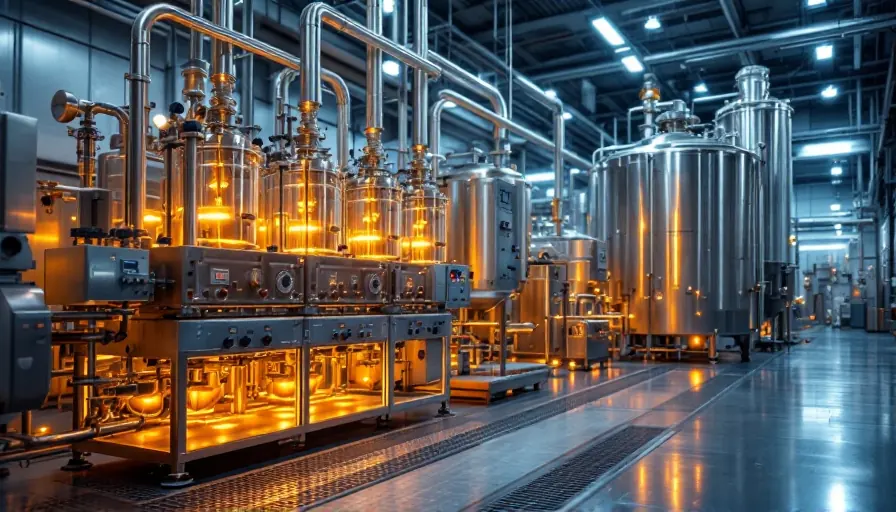
Industrial starch saccharification is the conversion of liquefied starch dextrins (DE 10–15 from alpha amylase liquefaction) into the target sugar profile required by the end application. Where glucose syrup plants use glucoamylase to maximise glucose output, maltose-producing applications rely on beta amylase — an exo-acting enzyme (EC 3.2.1.2) that progressively removes maltose disaccharide units from the non-reducing ends of amylose and amylopectin chains. This enzymatic specificity makes beta amylase the definitive industrial tool for starch-to-maltose conversion.
Our beta amylase for starch saccharification is sourced from barley or soybean (50,000–150,000 U/g) and operates at pH 4.5–6.5 and 45–65°C — the conditions that define industrial saccharification reactors for maltose syrup production. The starch substrate enters the saccharification stage as a DE 10–15 dextrin stream from alpha amylase liquefaction. Beta amylase is then dosed at 0.5–2.5 kg per tonne of dry starch solids into the saccharification tank (temperature controlled at 55–62°C, pH 5.0–5.5), and the conversion hold runs for 18–48 hours depending on target maltose content and reactor design.
The practical limit of beta amylase saccharification alone is 55–68% maltose on a dry solids basis. The ceiling exists because beta amylase cannot cleave through α-1,6 branch points in amylopectin — when it reaches a branch, it stops and moves to another chain. For maltose levels above 68%, pullulanase is added alongside beta amylase to debranch the amylopectin at α-1,6 bonds, making the linear stubs available for further maltose production by beta amylase.
For maltose syrup plants, brewing ingredient facilities, fermentation substrate producers and pharmaceutical excipient manufacturers, and for the distributors who resell to them, beta amylase selection rests on activity (U/g), saccharification yield under your process conditions, lot-to-lot consistency, and food-grade documentation. We supply COA, TDS, ISO 9001, HALAL, KOSHER, and food-grade certificates per lot. MOQ 25 kg; bulk pricing for multi-tonne monthly quantities.
Corn Starch Saccharification to High-Maltose Syrup
The largest volume application for industrial beta amylase is corn starch saccharification to 55–65% maltose syrup. After alpha amylase liquefaction to DE 12–14, the corn dextrin stream is cooled to 58–62°C, pH adjusted to 5.0–5.5, and beta amylase dosed at 0.8–1.5 kg/t dry starch. The saccharification hold of 24–36 hours achieves 58–65% maltose. The syrup is then filtered through carbon and ion exchange to remove colour, minerals, and off-flavours before evaporation to 70–80% dry solids for commercial sale.
Tapioca and Wheat Starch Saccharification
Tapioca and wheat starch saccharification with beta amylase follows the same process as corn starch but with adjustment for different substrate characteristics. Tapioca dextrin saccharification produces lighter-coloured syrup preferred in Southeast Asian premium food markets. Wheat starch saccharification requires slightly higher enzyme dosage (1.0–2.0 kg/t dry starch) due to the different dextrin distribution from wheat starch liquefaction. Both substrates achieve 55–65% maltose with standard beta amylase at the recommended saccharification conditions.
Pharmaceutical Maltose Excipient Production
Pharmaceutical-grade maltose (purity >98% on dry solids basis) for injection solutions, lyophilisation stabilisers, and excipient applications requires enzymatic saccharification followed by crystallisation. The saccharification stage uses high-purity beta amylase at 1.5–2.5 kg/t dry starch combined with pullulanase to maximise maltose yield (>80% in solution) from pharmaceutical-grade corn starch. Enzyme purity and documented food-grade or pharmaceutical-grade compliance are critical for this application.
Malto-Oligosaccharide Production
Controlled partial saccharification with beta amylase at reduced dosage (0.2–0.5 kg/t dry starch) and shorter reaction time (6–12 hours) produces malto-oligosaccharide (MOS) syrups rich in maltose, maltotriose, and maltotetraose rather than converting completely to maltose. These MOS syrups are used as prebiotic ingredients in functional foods, sports nutrition, and specialised clinical nutrition products. Partial saccharification requires precise enzyme dosage and reaction control to hit the target oligosaccharide distribution.
| Parameter | Value |
| Activity range | 50,000 – 150,000 U/g (multiple grades) |
| Optimal pH | 4.5 – 6.5 |
| Optimal temperature | 45°C – 65°C |
| Form | White to light yellow powder |
| Shelf life | 12 months (sealed, cool, dry place) |
| Packaging | 25 kg fiber drums |
Frequently Asked Questions
What is the maximum maltose yield from beta amylase saccharification?
Beta amylase alone on a well-liquefied corn or tapioca starch (DE 12–14) typically achieves 58–68% maltose on a dry solids basis under optimal conditions (pH 5.0–5.5, 58–62°C, 36–48 hours, dosage 1.5–2.0 kg/t dry starch). The limit is set by the enzyme's inability to cleave α-1,6 branch points in amylopectin. Adding pullulanase (debranching enzyme) at 0.3–0.6 kg/t alongside beta amylase removes these branches and can push maltose yield to 75–85%. For applications requiring >80% maltose, the combined beta amylase + pullulanase approach is necessary.
How is the beta amylase saccharification reaction stopped?
The saccharification reaction is terminated by raising temperature above the enzyme's inactivation point (above 75°C for beta amylase) to lock in the maltose profile and prevent further hydrolysis. This is done by heating the saccharification batch after the target conversion time and maltose level have been confirmed by HPLC or refractometric analysis. Stopping the reaction precisely at the target DE and maltose percentage is important for consistent syrup specification, since over-saccharification produces higher glucose at the expense of maltose in the final product profile.
What process conditions are critical for industrial beta amylase saccharification?
The four critical parameters are: (1) Temperature: 55–62°C — above 65°C, enzyme activity drops sharply and the enzyme is inactivated; (2) pH: 5.0–5.5 — optimal activity range, deviation increases saccharification time or reduces yield; (3) Input liquefact DE: 12–14 — too low means high viscosity and poor enzyme distribution; too high means less substrate per chain length available for maltose production; (4) Enzyme dosage: 0.8–2.0 kg/t dry starch depending on target maltose and hold time. Monitoring all four parameters with consistent process control gives reproducible maltose syrup quality across production batches.
Can beta amylase be used in continuous saccharification systems?
Yes. Continuous saccharification in plug-flow reactor columns or continuously stirred tank reactor (CSTR) systems is feasible with beta amylase, though enzyme immobilisation is not practical for beta amylase in the same way as glucose isomerase. Instead, beta amylase is dosed into the continuous liquefact feed stream and the saccharification reactors are sized for the required hold time at the target throughput. The dosage per unit of dry starch is the same as in batch systems; the key engineering parameter is reactor residence time to achieve target maltose content at the exit stream.
Request Beta Amylase for Your Saccharification Process
Provide your application and required volume. Receive a free sample, COA, and pricing within 24 hours.
Request a Quote