Action of Alpha and Beta Amylase on Starch: Buyer Checklist
Compare alpha vs beta amylase for starch conversion, maltose yield, process conditions, QC checks, and a B2B buying checklist.
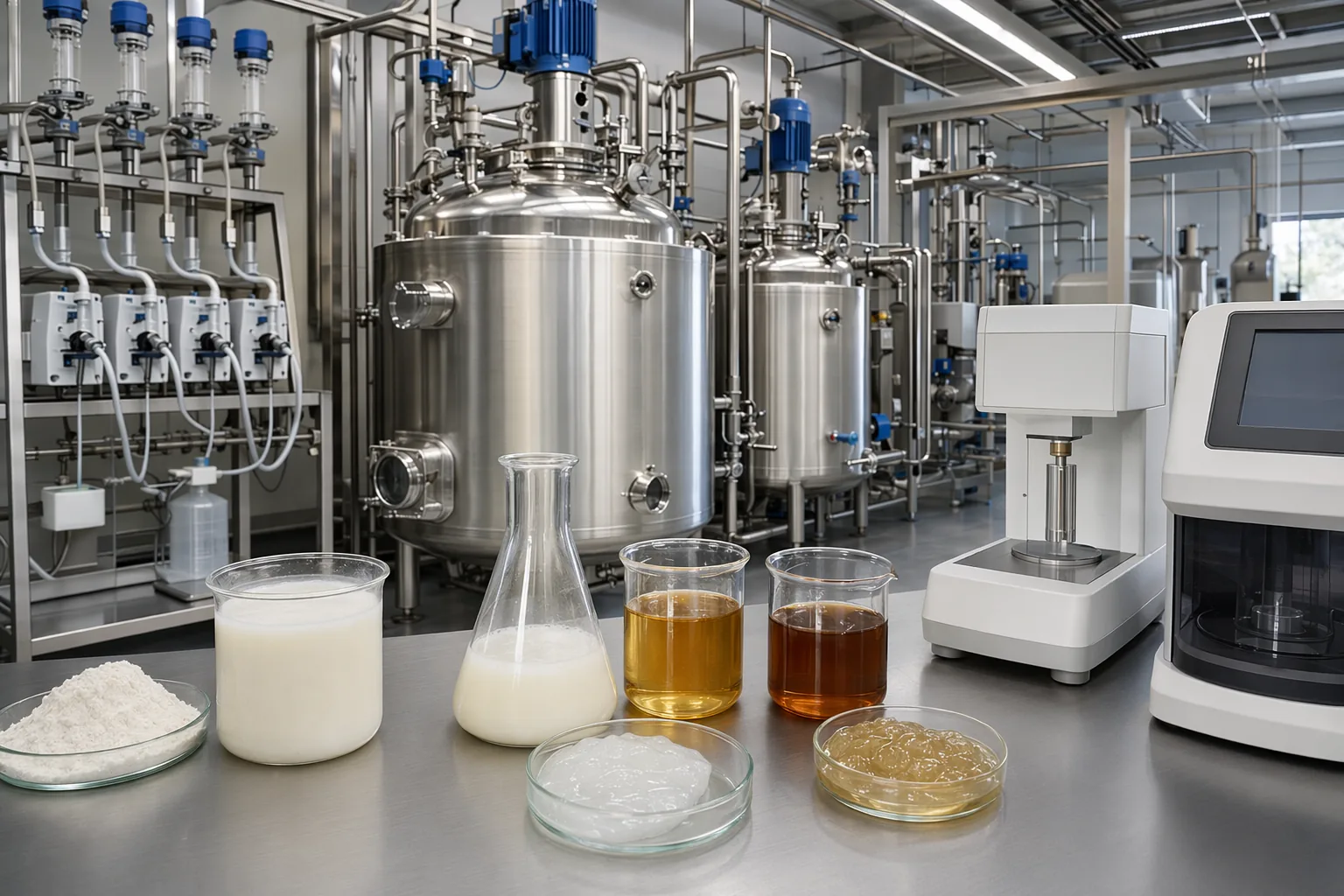
For starch processors, brewers, malt extract producers, and syrup manufacturers, the right beta amylase enzyme specification depends on how alpha and beta amylase work together to control dextrin profile, maltose yield, filtration, and cost-in-use.
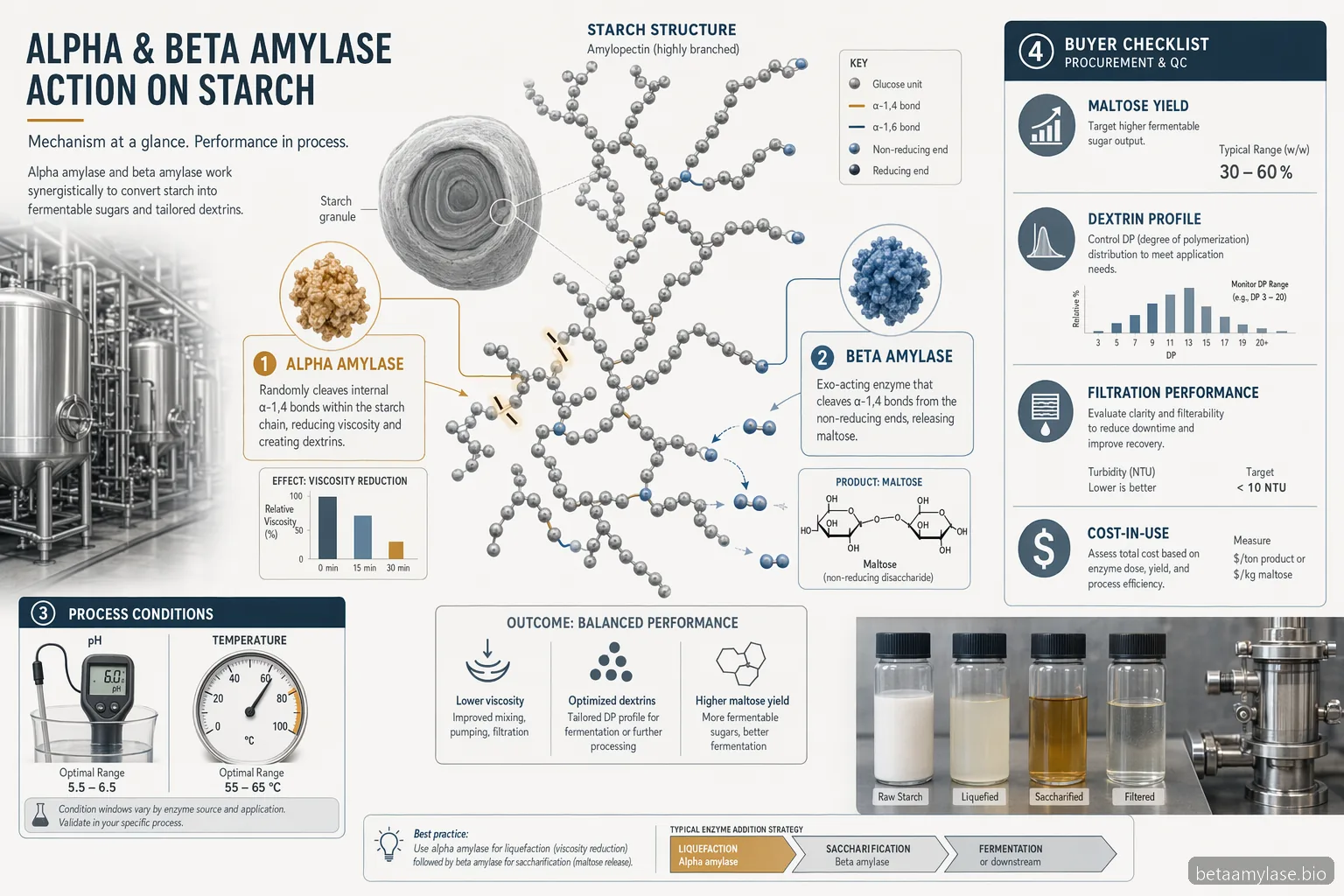
How alpha and beta amylase act on starch
The action of alpha and beta amylase on starch is complementary, not interchangeable. Alpha amylase is an endo-acting enzyme: it attacks internal alpha-1,4 glucosidic bonds in gelatinized amylose and amylopectin, quickly reducing viscosity and producing soluble dextrins. Alpha-amylase also removes starch size from textiles, as this German-language page on textile desizing enzymes explains. Beta amylase is an exo-acting saccharifying enzyme: it releases maltose units stepwise from non-reducing chain ends but stops near alpha-1,6 branch points. In practical starch conversion, alpha amylase creates the dextrin structure and chain ends that beta amylase can further convert to maltose. This is why industrial buyers comparing alpha amylase vs beta amylase should focus on sequence, substrate preparation, and target sugar profile rather than choosing only by unit price. Where alpha amylase, glucoamylase, pullulanase, and beta amylase attack starch differs, so enzyme choice should match whether the target is liquefaction, high-maltose syrup, fermentable wort, or a defined malt extract profile.
Alpha amylase: liquefaction and viscosity reduction • Beta amylase: maltose generation from chain ends • Pullulanase: debranching alpha-1,6 linkages • Glucoamylase: glucose production from chain ends
Process conditions for beta amylase performance
The action of beta amylase on starch depends strongly on substrate accessibility. Native starch granules are usually poor substrates; processors typically gelatinize starch, liquefy with thermostable alpha amylase, then cool and adjust pH for beta saccharification. Common industrial evaluation ranges for beta amylase are pH 5.0 to 6.0 and 50 to 65 degrees C, but the supplier TDS should define the validated operating window for the specific product. Dosage is normally optimized by activity units per ton of dry starch, not by powder weight alone. A practical screening band may start around 0.1 to 1.0 kg enzyme preparation per metric ton of dry solids, then be refined by activity, substrate, residence time, and target maltose. Avoid excessive heat hold after beta addition because many beta amylase products are less thermostable than liquefying alpha amylases.
Confirm starch gelatinization before saccharification • Control pH before dosing beta amylase • Track dry solids, DE, maltose, and viscosity • Validate temperature stability at actual residence time
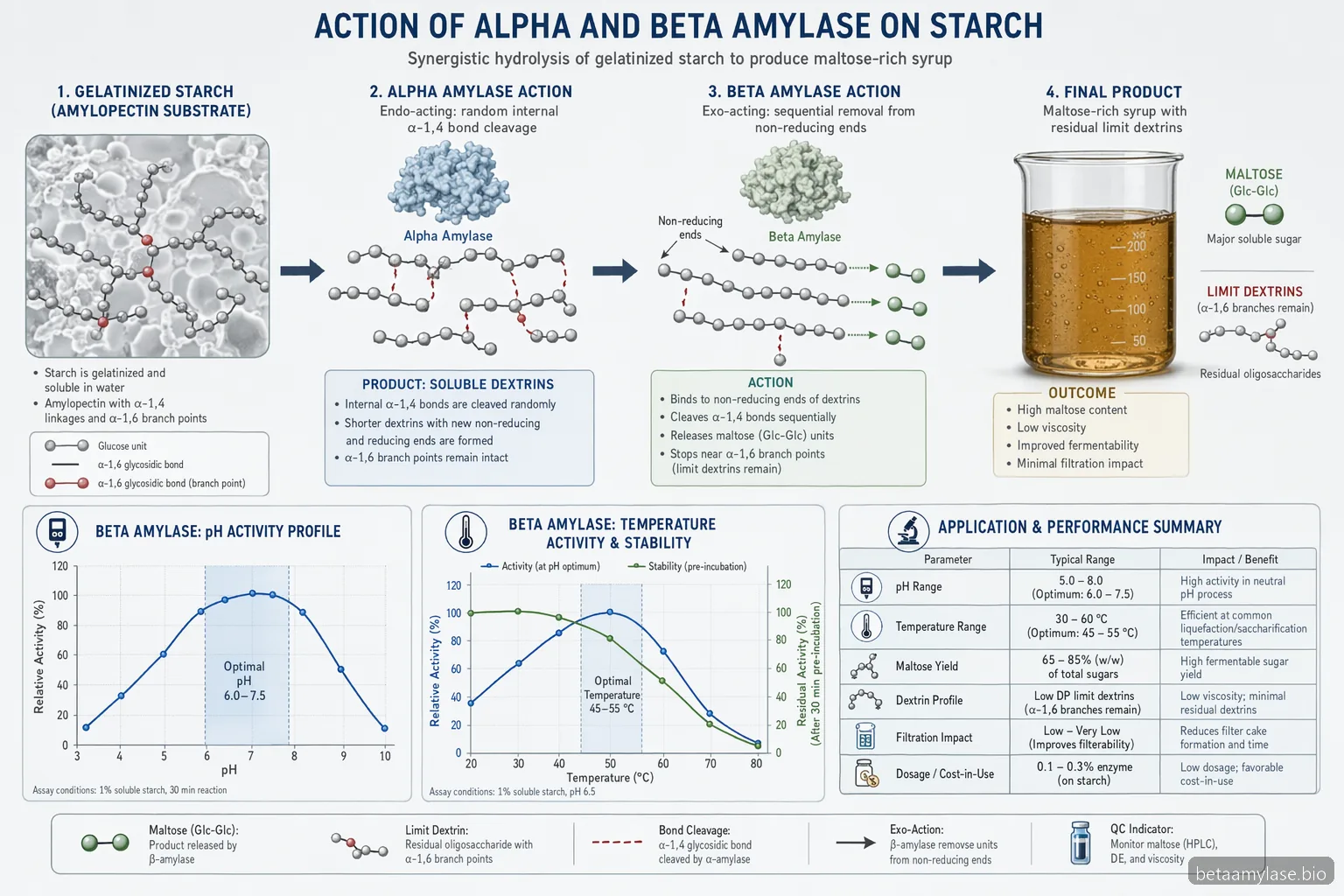
Specification checklist for B2B procurement
A robust beta amylase specification should make comparison between suppliers measurable. Ask for activity definition, activity per gram or milliliter, recommended pH and temperature range, carrier or diluent type, physical form, storage conditions, shelf life, and lot-to-lot activity tolerance. The COA should confirm the delivered lot’s activity, appearance, microbiological limits where applicable, and any agreed contaminants or heavy metal limits relevant to your market. The TDS should explain process use, dosage guidance, compatibility with alpha amylase beta amylase systems, and expected reaction profile. The SDS should cover safe handling, dust or aerosol precautions, and transport information. For food or beverage processing, request allergen, GMO, and regulatory statements appropriate to your destination market without assuming certifications that have not been documented.
COA: lot-specific quality confirmation • TDS: process and dosing guidance • SDS: handling and safety information • Regulatory statements: market-specific documentation • Sample policy: enough material for pilot validation
QC checks for maltose yield and process control
For high-maltose syrup, brewing adjunct conversion, or malt extract standardization, QC should connect enzyme action to commercial output. Measure dry solids, pH, temperature, viscosity, iodine reaction, dextrose equivalent, maltose percentage, and residual dextrin distribution. HPLC sugar profiling is the clearest way to compare alpha beta amylase starch dextrin maltose outcomes across lots and suppliers. In brewing, fermentability and wort viscosity may be as important as absolute maltose percentage. In syrup production, maltose target, filtration behavior, color formation, and downstream evaporation load influence the best enzyme program. Run controls with alpha amylase only, beta amylase only where relevant, and combined alpha amylase beta amylase conditions. This helps separate poor liquefaction from weak saccharification and prevents overpaying for enzyme activity that does not improve the final specification.
Use HPLC for glucose, maltose, maltotriose, and dextrins • Trend viscosity before and after liquefaction • Check iodine reaction for residual starch • Compare enzyme cost per ton of finished solids
Pilot validation and cost-in-use
Supplier qualification should move from desktop review to pilot validation before full purchase commitment. Start with a defined starch source, dry solids level, gelatinization profile, alpha amylase liquefaction condition, pH adjustment, beta amylase dose, reaction time, and hold temperature. Test at least three dose levels and include your current enzyme program as a benchmark. Cost-in-use should include enzyme price, dosage, reaction time, energy for heating or cooling, yield change, filtration impact, downtime risk, and consistency of final maltose specification. A lower-priced beta amylase enzyme may cost more if it requires longer residence time or produces variable saccharification. During supplier qualification, review manufacturing consistency, technical support responsiveness, documentation completeness, change notification practice, and ability to provide repeatable lots at the required volume.
Benchmark against the current process • Calculate cost per ton of target product • Confirm documentation before scale-up • Approve supplier only after repeatable pilot data
Technical Buying Checklist
Buyer Questions
Alpha amylase cuts internal alpha-1,4 bonds in gelatinized starch, rapidly reducing viscosity and creating dextrins. Beta amylase works from non-reducing chain ends and releases maltose units, but it is limited by branch points in amylopectin. In industrial starch conversion, alpha amylase is usually used first for liquefaction, while beta amylase is used later for saccharification and maltose development.
In most industrial processes, beta amylase is not selected for direct raw starch conversion. It performs best after starch has been gelatinized and liquefied so that chain ends are accessible and viscosity is manageable. Some specialty enzyme systems are designed for granular starch, but buyers should verify that claim with the supplier’s TDS, pilot trials, and sugar profile data under their own dry solids and temperature conditions.
Pullulanase may be useful when alpha-1,6 branch points limit beta amylase and a higher maltose yield is required. Glucoamylase is used when the target shifts toward glucose or higher fermentability rather than a maltose-rich profile. The decision should be based on HPLC sugar targets, residence time, and downstream requirements, because adding enzymes can improve conversion but also changes the final carbohydrate distribution and cost-in-use.
Procurement should request a current COA, TDS, SDS, activity definition, recommended storage conditions, shelf life, regulatory statements relevant to the destination market, and a sample for pilot testing. Supplier qualification should also review lot consistency, technical support, change notification practices, and commercial availability. Approval should be based on documented performance at plant-like pH, temperature, dry solids, and reaction time.
Related Search Themes
beta amylase, alpha beta amylase starch dextrine maltse, alpha and beta amylase starch, alpha amylase gluco amylase pullulanse beta amylase attach starch where, action of beta amylase on starch, alpha vs beta amylase
Beta-Amylase for Research & Industry
Need Beta-Amylase for your lab or production process?
ISO 9001 certified · Food-grade & research-grade · Ships to 80+ countries
Frequently Asked Questions
What is the main difference in alpha amylase vs beta amylase?
Alpha amylase cuts internal alpha-1,4 bonds in gelatinized starch, rapidly reducing viscosity and creating dextrins. Beta amylase works from non-reducing chain ends and releases maltose units, but it is limited by branch points in amylopectin. In industrial starch conversion, alpha amylase is usually used first for liquefaction, while beta amylase is used later for saccharification and maltose development.
Can beta amylase convert raw starch directly to maltose?
In most industrial processes, beta amylase is not selected for direct raw starch conversion. It performs best after starch has been gelatinized and liquefied so that chain ends are accessible and viscosity is manageable. Some specialty enzyme systems are designed for granular starch, but buyers should verify that claim with the supplier’s TDS, pilot trials, and sugar profile data under their own dry solids and temperature conditions.
When should pullulanase or glucoamylase be added with beta amylase?
Pullulanase may be useful when alpha-1,6 branch points limit beta amylase and a higher maltose yield is required. Glucoamylase is used when the target shifts toward glucose or higher fermentability rather than a maltose-rich profile. The decision should be based on HPLC sugar targets, residence time, and downstream requirements, because adding enzymes can improve conversion but also changes the final carbohydrate distribution and cost-in-use.
What should procurement request before approving a beta amylase supplier?
Procurement should request a current COA, TDS, SDS, activity definition, recommended storage conditions, shelf life, regulatory statements relevant to the destination market, and a sample for pilot testing. Supplier qualification should also review lot consistency, technical support, change notification practices, and commercial availability. Approval should be based on documented performance at plant-like pH, temperature, dry solids, and reaction time.
Related: Beta Amylase for Industrial Starch Saccharification
Request a beta amylase specification review, sample plan, and pilot validation protocol for your starch process. The application page on industrial starch saccharification lists specs, MOQ, and a free 50 g sample.
Contact Us to Contributehello@mail.betaamylase.bio